

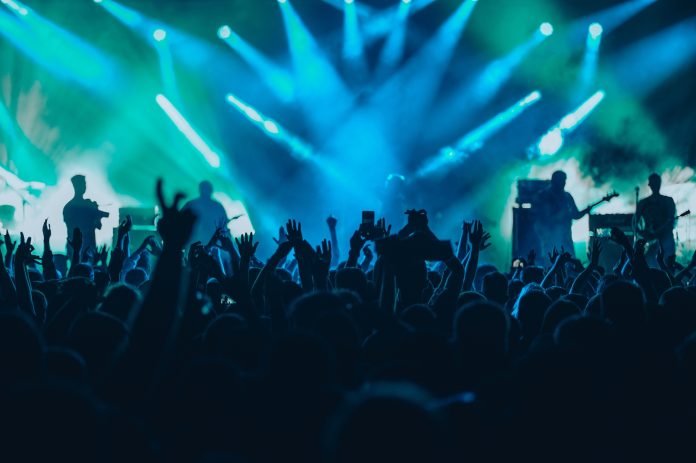
The Underground and Its Emetic Consequences
I’ve played in a long succession of bands and collaborations. I’ve worked with Mercury Rev, Goat, Chad Channing and others. I’ve even been described as one of the best acts in my field—although, when your field consists largely of endless rehashes of the same pastoral-psychedelic-African-parodic formula, that’s hardly something to celebrate.
I’ve toured Europe, released records that made year-end lists, played filthy basements smelling of vomit and piss as well as London’s Roundhouse and Manchester’s Albert Hall. I’ve crossed the threshold of the BBC and slept on floors covered in cat hair and God knows what else, all anticipated by the most sinister phrase in any tour itinerary:
Floor accommodation.
I’ve also swallowed my share of humiliation. After thousands of records sold and enough reviews to fill Santa Claus’s sack, one record executive looked me in the eye and said:
«We’re not interested in your artistic evolution. We sell music the same way we sell car insurance. Make the same record over and over again—or get the fuck out.»
You know who you are. After the curse I put on you, however, you should now exist in a pleasantly semi-liquid state. To me, this is music: a theatre of drama where you’re rarely treated as someone performing actual labour, only as a monkey who occasionally shines but more often soils himself.
Yet it is also the story of someone driving four hundred kilometres simply to tell you that one of your records carried them through the darkest period of their life. Of the stranger who handed me forty pounds after I blew a tyre in Wales forty minutes before a show. Of Jonathan Donahue of Mercury Rev, who quietly paid me money somebody else owed, saving me from spending the night in a supermarket car park.
This is also a world increasingly reserved for people wealthy enough to play musician in their spare time. If you’re not one of them, you’re out. And if you’re out, you’re already dead.
The Here and Now
Against the atmosphere of this new cultural Middle Ages, I’d like to explain what troubles me most. One might object that, in an age of warmongers, narcissistic oligarchs and algorithmic manipulation, worrying about music feels absurd. I would argue the opposite.Culture is never peripheral. It determines how we perceive reality long before politics gives it institutional form.
Musicians should reclaim from algorithms—and from audiences passively managed by multinational platforms—the authority to discover and circulate culture. Original artists should no longer compete on the same economic terms as an industrial ecosystem built almost entirely around tribute acts, nostalgia and algorithmic familiarity.
This is not an attack on cover bands. It is an indictment of promoters, producers and cultural institutions that invest almost exclusively in predictable products while treating artistic risk as a financial inconvenience. The responsibility belongs equally to critics who have not yet surrendered their vocabulary to marketing departments.
The task is linguistic before it is political. Things should once again be called by their proper names. Culture has reached a breaking point because it increasingly obeys the logic of markets mistaken for nature. Markets are not natural. They are ideological constructions.
1. Music Is Everywhere, Therefore It Is Nowhere
Music has become permanent background.
An endless stream organised around availability rather than attention.
The playlist has replaced the album.
The hook has replaced development.
Listening becomes consumption.
Quantity quietly replaces quality.
As in pharmacology, the dose makes the poison.
2. The Underground Without an Outside
The contemporary underground no longer fears being absorbed by the mainstream.
Its tragedy is that it can barely imagine existing outside market logic.
Before the fall of the Berlin Wall, «underground» still implied a material distinction between inside and outside. Today opposition survives mostly as branding.
Style becomes symbolic capital.
Rebellion becomes another marketing category.
The original anger remains, but detached from history it becomes perfectly compatible with the system it once sought to negate.
The energies that once belonged to rock have not disappeared.
They have migrated—to gaming culture, digital micro-scenes, hyperpop, trap, meme culture and extreme electronics.
The medium changes.
Intensity does not.
3. Nobody Gives a Fuck About Your Talent
Algorithms do not measure desire.
They manufacture it.
Access increasingly depends on visibility, followers and engagement before anyone has even heard your music.
Talent matters only after it has already become measurable.
Visibility no longer follows value.
Value follows visibility.
4. Quantification Against Qualification
Contemporary music lives beneath a regime of total quantification.
Streams.
Followers.
Likes.
Engagement.
Everything becomes numerical because numbers are easier to govern than judgement.
Quality does not disappear.
It simply ceases to influence decisions.
Anything requiring patience, ambiguity or repeated listening becomes economically inefficient.
The algorithm does not merely recommend culture.
It quietly determines what culture is allowed to become.
Yet aesthetic judgement survives precisely where measurement struggles to reach: in communities, obsessive listeners, independent labels and conversations that remain largely invisible to platforms.
Perhaps that is where the underground still exists—not as a genre, but as a form of attention.
5. Grand Finale in Hell
Perhaps the defining characteristic of contemporary culture is its absence of risk.
It neither devastates nor consoles.
It merely accompanies consumption.
About a year ago, the owner of a venue where I had once performed contacted me.
«I’d like you to produce my music.»
«Fine,» I replied. «Send it.»
Five songs arrived.
Each featured a different singer.
The music itself was harmless enough, somewhere between vintage post-punk and anaesthetised soul.
But something felt profoundly wrong.
As though someone had poured Valium into a margarita.
So I asked:
«Tell me about these singers.»
He answered with complete sincerity.
«Those voices were generated by an algorithm.»
I immediately rushed to the bathroom and spat blood.
Then I recited an ancient Persian mantra, drew two protective sigils and completed the ritual by rolling naked through the mud in my garden.
I remember every detail with extraordinary clarity.
And every single word of it is brutally true.